The 11 Essential Blockchain Tips That Actually Work for Crypto Beginners [2025]
If you’re new to Crypto and DeFi in the United States, understanding blockchain isn’t optional—it’s your survival kit. Blockchain explains how your money moves, who verifies it, which risks you actually face, and why fees, speed, and rules differ across networks. It also anchors how U.S. regulations treat your activity—what triggers taxes, why some wallets require KYC, and how illicit-finance safeguards affect privacy.
Here’s the bottom line: people who learn the ledger beat people who chase the logo. After studying hundreds of beginner journeys, one pattern emerges—those who can read a block explorer, explain consensus, and estimate fees avoid the costly mistakes that wipe out newcomers. For more details, see our guide on How to start using DeFi protocols without losing money?.
The cryptocurrency landscape has evolved dramatically since Bitcoin’s inception in 2009. What started as a peer-to-peer electronic cash system has blossomed into a multi-trillion-dollar ecosystem encompassing decentralized finance, non-fungible tokens, smart contracts, and layer-2 scaling solutions. Yet despite this growth, the fundamental principles remain unchanged: understanding the underlying technology is your best defense against costly mistakes. For more details, see our guide on What common scams and social-engineering attacks target wallet users and how to avoid them?.
Recent industry analysis reveals that over 80% of crypto newcomers lose money within their first six months—not because they picked the wrong tokens, but because they didn’t understand the infrastructure they were using. They sent funds to wrong addresses, paid excessive fees during network congestion, fell victim to smart contract exploits, or lost access to their wallets entirely. For more details, see our guide on When should beginners opt for custodial vs non-custodial custody models?.
Below are 11 actionable, screenshot-worthy tips (with data) that make blockchain clarity your unfair advantage. Let’s dive in.
1) Before You Buy Anything, Learn to Follow One Transaction End-to-End
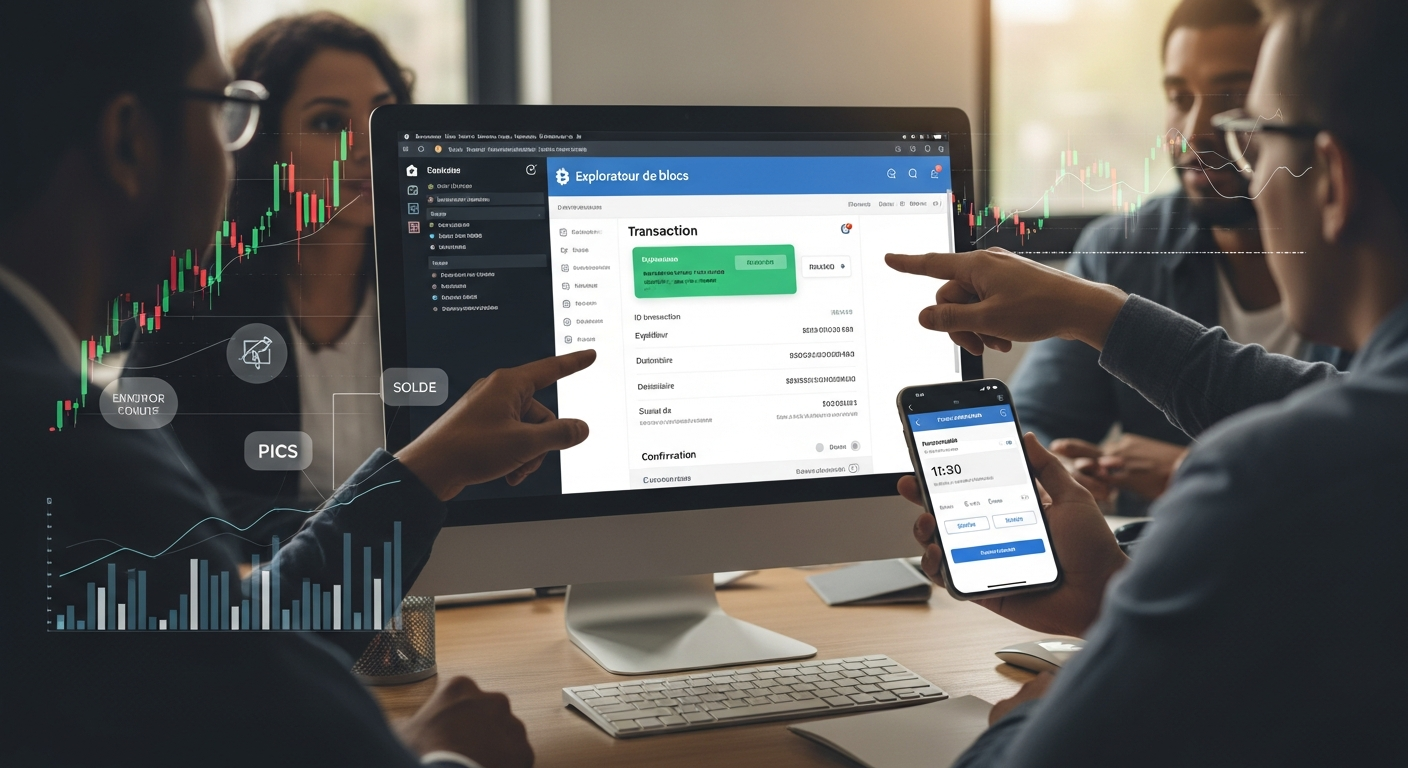
Surprising, but effective. Before you buy your first $1 of crypto, complete and track a test transaction on a block explorer (mempool.space for Bitcoin, Etherscan for Ethereum) and watch it confirm.
Why this works: It instantly demystifies addresses, fees, confirmations, and finality—the exact mechanics that cause beginner losses. Think of it as learning to read the gauges in your car before you drive cross-country.
Here’s what most people don’t realize: every blockchain transaction tells a complete story. When you send Bitcoin from address A to address B, you’re not just moving numbers in a database—you’re participating in a global consensus mechanism that involves thousands of miners competing to include your transaction in the next block.
Data to know:
- Bitcoin transaction fees briefly spiked above $1 during the April 2024 halving weekend; timing matters way more than you think. A little patience can save a lot of money.
- After Ethereum’s EIP-4844 (March 2024), many Layer-2 (L2) fees dropped into the $1.01–$1.05 range for simple transfers, often 10x cheaper than pre-upgrade. That’s like paying for a latte instead of a steak dinner to move your money!
- During peak congestion periods, Bitcoin’s mempool can contain over 400,000 unconfirmed transactions, creating a bidding war for block space.
Do this:
- Send a $1 test on Bitcoin. Note how the miner fee you choose changes your confirmation time. Play around with it.
- Repeat on an Ethereum L2 (Base, Optimism, Arbitrum). Compare cost and speed. The difference can be staggering.
- Practice reading transaction details: inputs, outputs, gas used, block height, and confirmation status.
Insider tip: Track the mempool first. Buying the coin without understanding the queue you’re joining is how people overpay or get stuck. It’s like checking the traffic report before your commute. This tiny habit can save you some frustrating headaches (and a few bucks!)
Try this and see the difference: Set up alerts on mempool.space for when Bitcoin fees drop below 10 sat/vB. You’ll often find windows where fees are 90% lower than peak times.
2) Score Networks by Economic Security, Not Marketing Claims (PoW vs. PoS)
A blockchain is only as strong as the cost to attack it. Learn how consensus really secures your money. Many beginners only look at price charts…a dangerous game.
The security of any blockchain network fundamentally depends on how expensive it would be for a malicious actor to rewrite transaction history or censor transactions. This isn’t about the token price—it’s about the economic incentives that keep validators honest.
Data to know:
- Bitcoin’s hashrate exceeded 600 exahashes per second in 2024, making sustained attacks economically prohibitive. This is why many consider Bitcoin the “gold standard” of crypto security.
- Ethereum’s switch to Proof-of-Stake (The Merge, Sept 2022) reduced energy use by an estimated 99.95%, while keeping high economic security via staked ETH. This was a massive upgrade.
- As of late 2024, over 32 million ETH (worth hundreds of billions) is staked on Ethereum, creating enormous economic penalties for malicious behavior.
Use the 3S Framework: A simple mental model for assessing blockchain robustness.
- Security: How expensive is it to rewrite history? (PoW hashpower vs. PoS stake slashing)
- Sustainability: What are energy and validator costs long-term?
- Sovereignty: How decentralized are miners/validators and client diversity?
What works: Before investing in any blockchain project, research its consensus mechanism. Proof-of-Work networks like Bitcoin require attackers to control 51% of mining power—an increasingly expensive proposition as hashrate grows. Proof-of-Stake networks like Ethereum require attackers to stake massive amounts of tokens that get “slashed” (destroyed) if they act maliciously.
Practical outcome: You’ll understand why Bitcoin can be slow and expensive at peaks yet incredibly hard to censor, and why Ethereum can deliver cheaper smart-contract execution via L2s with robust finality. Key takeaway: Understand the trade-offs!
Game-changer insight: The most secure networks aren’t necessarily the fastest or cheapest. Security, speed, and cost exist in constant tension—the “blockchain trilemma” that every network must navigate.
3) Throughput Reality Check: Blockspace Scarcity, Not Price Charts, Determines Your UX
Before you mint an NFT or try DeFi, do the math on throughput and fees. Don’t let FOMO drive your decisions.
Blockspace—the computational and storage capacity of a blockchain—is a finite resource. Understanding this scarcity helps you predict when fees will spike and why certain activities become prohibitively expensive during high demand.
Data to know:
- Bitcoin processes roughly 7 transactions per second (TPS) on L1; Ethereum L1 is around 15 TPS under normal conditions. Visa averages about 1,700 TPS (and can handle far more at peak). The gap is huge.
- L2 rollups on Ethereum effectively increase capacity by 10–100x, which is why swaps and transfers can cost pennies after EIP-4844. This is why you need to explore L2s.
- During the 2021 NFT boom, simple Ethereum transactions regularly cost $1-200 in gas fees, pricing out smaller users entirely.
Example:
- NFT drops on Ethereum L1 during congestion can fail or cost $1–$1 in fees; on an L2, the same action often costs under $1.10–$1.50 but settles to L1 after a delay. That’s a massive difference in user experience.
- DeFi protocols like Uniswap have deployed on multiple L2s specifically to offer users cheaper alternatives to mainnet trading.
Actionable: If you’re buying a small-cap token or trying DeFi, prefer L2s for cost and speed—but understand their settlement model (see Tip 8). Bottom line: L2s can save you a fortune.
Insider secret: Monitor gas trackers like ETH Gas Station or Blocknative before making transactions. Setting up alerts for low-gas periods can save you hundreds of dollars over time.
Now, before we move on, remember: understanding these concepts isn’t about becoming a blockchain engineer overnight. It’s about being an informed participant in this new ecosystem. It’s about protecting yourself.
The difference between successful crypto users and those who get burned often comes down to patience and preparation. The most expensive transaction is often the one you make in a hurry without checking network conditions first.
4) UTXO vs. Account Model: the Hidden Lever for Privacy and Fees
Bitcoin uses the UTXO model; Ethereum uses account balances. This affects everything from privacy to budgeting.
The Unspent Transaction Output (UTXO) model treats each transaction as consuming previous outputs and creating new ones, like breaking a $1 bill to pay for a $1 coffee and receiving $1 in change. The account model, used by Ethereum, maintains running balances like a traditional bank account.
Data to know:
- As of 2024, more than 60% of Bitcoin’s supply had not moved for at least one year—UTXO “age” can affect liquidity and fee strategies.
- Fees can vary by 10x in a single day; consolidating many small Bitcoin UTXOs during low-fee windows can save over 90% versus consolidating during peak surges (like April 2024).
- Large Bitcoin holders often maintain hundreds or thousands of separate UTXOs for enhanced privacy and fee optimization.
Practical examples:
- Bitcoin: Paying from many tiny UTXOs increases transaction size, raising fees. Consolidate during low-fee periods.
- Ethereum: One account balance, one nonce; easier UX but easier to track activity. For privacy, use best practices like new addresses and avoiding cross-linking identities.
Privacy implications: UTXOs can provide better privacy through coin control—choosing which specific outputs to spend. However, combining UTXOs in a single transaction can link them to the same user. Ethereum’s account model makes it easier to trace all activity from a single address.
Insider tip: If you need extra privacy for browsing, use Tor to research—then transact legally and compliantly. Remember that privacy tools may trigger enhanced scrutiny by U.S. exchanges and providers. Privacy is paramount, but always stay legal!
What works: Bitcoin users should learn coin control features in wallets like Electrum or Sparrow. Ethereum users should consider using fresh addresses for different activities and avoid reusing addresses unnecessarily.
5) Custody is a Spectrum: Map Your Threat Model Before You “Ape In”
Who holds your keys determines your actual risk—not the market price. Remember: Not your keys, not your coins.
Custody isn’t binary—it’s a spectrum of control and convenience. Your choice should align with your technical skills, the amount at stake, and your specific threat model.
Data to know:
- FTX’s 2022 collapse left an ~$1 billion hole in customer funds, despite appearing reputable.
- Mt. Gox lost an estimated 650,000–850,000 BTC in the 2014 hack, with repayments finally starting a decade later. These are stark reminders.
- According to Chainalysis, individual investors lost over $1.8 billion to crypto scams and hacks in 2022 alone.
Choose with intent:
- Exchange (custodial): Convenience, but counterparty risk and KYC. Good for beginners learning small amounts.
- Self-custody (software/hardware): You own keys; you are the backstop. Best once you can safely back up and test recovery.
- Multisig/assisted custody: Shared control reduces single-point failure; great for meaningful amounts.
Advanced custody considerations:
- Geographic distribution of keys and backups
- Inheritance planning and dead man’s switches
- Operational security for key generation and storage
- Regular testing of recovery procedures
Pro move: Set thresholds. Example: Keep <$1,000 on an exchange; move >$1,000 to a hardware wallet; use 2-of-3 multisig for long-term holdings. Create a tiered system to protect yourself.
Game-changer: Many users don’t realize that even “self-custody” wallets like MetaMask can have vulnerabilities. Hardware wallets like Ledger or Trezor provide an additional security layer by keeping private keys offline.
6) Smart-Contract Risk is Real—Use a 5-Minute Due-Diligence Checklist
DeFi is powerful—and a honeypot for exploits. Understanding the code risk protects your capital. Treat every smart contract like a potential security risk.
Smart contracts are immutable programs that control billions of dollars in value. Unlike traditional software, bugs in smart contracts can’t be easily patched, making due diligence critical.
Data to know:
- Hackers stole about $1.8 billion from crypto projects in 2022; losses fell to roughly $1.7 billion in 2023, with most losses concentrated in DeFi protocol exploits.
- Oracle manipulation, reentrancy, and bridge bugs are common root causes.
- The average DeFi exploit results in losses of $1.5 million, according to blockchain security firms.
5-minute checklist (before you connect your wallet):
- Is the contract verified on Etherscan? Can you read the code and audits?
- Are admin keys time-locked or renounced? Who can pause/upgrade?
- How concentrated are token holders? If top 10 hold >70%, exit liquidity risk is high.
- Is liquidity locked/vested? When are big unlocks?
- Does the project depend on a bridge? See Tip 8 for settlement risk.
Additional red flags to watch:
- Anonymous teams with no track record
- Unrealistic yield promises (>100% APY sustainably)
- Recent forks of existing protocols without proper audits
- Lack of documentation or whitepaper
- Social media presence focused on hype rather than technology
Example: In 2023–2024, several bridges and perps DEXs suffered oracle-related exploits—always check the oracle design. Don’t skip this step. It’s critical.
Insider secret: Use tools like DeFiSafety.com to check protocol safety scores before investing. Protocols with scores below 70% should be approached with extreme caution.
7) Lock Down Accounts Like a Pro: Hardware Keys, Offline Backups, and Anti-SIM-Swap Moves
Most beginner losses come from account takeovers and sloppy opsec, not fancy hacks. Basic security hygiene goes a long way.
The weakest link in crypto security is often the human element. Social engineering, phishing, and account takeovers are far more common than sophisticated smart contract exploits.
Data to know:
- Google reported that after it rolled out security keys to 85,000+ employees in 2017–2018, successful phishing-based account takeovers dropped to zero.
- The FBI’s 2023 IC3 report counted $1.57 billion in investment fraud losses; a significant portion involved crypto payment rails. The stakes are high.
- SIM swap attacks increased by 400% between 2020 and 2023, with crypto holders being prime targets.
Do this today:
- Use a hardware security key (FIDO2/WebAuthn) for exchanges, email, and password manager.
- Disable SMS 2FA wherever possible; use app-based 2FA or keys.
- Keep seed phrases offline in two geographically separate places. Test a recovery with a tiny amount.
- For sensitive research, use Tor or a privacy-respecting browser profile. Never paste seeds or private keys into any website—ever.
Advanced security measures:
- Use a dedicated device or browser profile for crypto activities
- Enable withdrawal whitelists on exchanges
- Set up email alerts for all account activities
- Consider using a separate phone number for crypto accounts
- Regularly audit connected applications and revoke unnecessary permissions
What works: Create a security checklist and review it monthly. The most secure crypto users treat operational security as an ongoing practice, not a one-time setup.
Try this and see the difference: Enable a hardware security key on your most important accounts this week. You’ll immediately notice how much more confident you feel about your account security.
8) Finality, Confirmations, and Bridges: Don’t Confuse “Fast UI” with “Settled Money”
Speedy interfaces can mask settlement risk. Learn how long it actually takes for funds to be safe. Just because it looks like it’s there, doesn’t mean it actually is.
Modern crypto interfaces are designed for speed and convenience, but they often hide the complex settlement processes happening behind the scenes. Understanding true finality protects you from costly mistakes.
Data to know:
- Bitcoin’s typical “6 confirmations” target takes about 60 minutes; fewer confirms increase reorg risk for large transfers.
- Ethereum’s PoS finality generally occurs within 2 epochs (~12–15 minutes), while optimistic rollup withdrawals to L1 often have ~7-day challenge windows.
- Cross-chain bridges have been responsible for over $1 billion in losses since 2021, making them one of the highest-risk components in DeFi.
Practical implications:
- On L2s, instant swaps are great—but moving funds back to Ethereum L1 can take days (optimistic) or minutes–hours (zk-rollups).
- Bridges increase attack surface; many of the largest crypto losses have involved cross-chain bridge exploits.
- Exchange deposits often require different confirmation times: 1 confirmation for Ethereum, 3-6 for Bitcoin, sometimes 50+ for smaller altcoins.
Settlement hierarchy (from fastest to most secure):
- Same-chain transactions (seconds to minutes)
- Layer-2 to Layer-2 (minutes)
- Layer-2 to Layer-1 (hours to days)
- Cross-chain bridges (minutes to hours, but higher risk)
Action steps:
- For large transfers, wait recommended confirmations.
- Prefer well-audited native bridges or canonical L2 bridges. Avoid unknown cross-chain shortcuts. Bridges are a potential Achilles’ heel, so tread carefully.
- Never assume funds are “final” just because your wallet shows them—check the actual confirmation status.
Game-changer insight: The crypto industry’s focus on user experience sometimes obscures important technical details. Always verify settlement status for important transactions.
9) Engineer Your Fees: Batching, Timing, and EIP-1559 Tactics That Save Real Money
Fees aren’t random. A few habits can cut costs dramatically. Think of fees as taxes. Learn to minimize them.
Transaction fees represent the cost of blockspace—a scarce resource that fluctuates based on demand. Smart users learn to optimize their fee strategies like day traders optimize their entry and exit points.
Data to know:
- Bitcoin transaction batching can reduce per-payment fees by 60–80% for businesses and active users.
- Since EIP-1559 (Aug 2021), Ethereum has burned over 4 million ETH in base fees by 2024; understanding base fee + priority tip saves overpaying.
- During the 2021 bull market, some users paid over $1 in fees for single Ethereum transactions that could have been done for under $1 with proper timing.
Playbook:
- Bitcoin: Batch multiple payments into one transaction when fees are low; use Replace-By-Fee (RBF) if you must speed up later.
- Ethereum: Let your wallet suggest a priority tip; avoid peak times (major NFT mints, hot token launches).
- All networks: Check a fee dashboard before transacting and set alerts for low-fee windows.
Advanced fee optimization:
- Use fee estimation APIs to predict optimal fee rates
- Learn about transaction replacement mechanisms (RBF for Bitcoin, gas price increases for Ethereum)
- Consider using Layer-2 solutions for routine transactions
- Time non-urgent transactions for weekends or off-peak hours
Timing strategies:
- Bitcoin fees are typically lowest on weekends and during Asian night hours (UTC)
- Ethereum fees spike during major DeFi events, NFT drops, and market volatility
- Layer-2 fees remain relatively stable but can spike during L1 congestion
What works: Set up fee alerts and maintain a “fee budget” for different types of transactions. Treat fee optimization as a skill worth developing—it can save thousands of dollars over time.
10) Stablecoins are Not “Digital Dollars”—They’re Regulated Promises
Stablecoins power beginner UX, but they’re only as strong as their reserves and banking partners. They are IOUs, not actual dollars.
Stablecoins represent one of crypto’s most important innovations—programmable money that maintains price stability. However, they’re also one of the most misunderstood, with many users treating them as risk-free when they’re actually complex financial instruments.
Data to know:
- Tether (USDT) surpassed $1 billion in market capitalization in 2024, dominating stablecoin markets.
- USD Coin (USDC) temporarily depegged to about $1.88 in March 2023 after Silicon Valley Bank’s failure affected reserves—then regained its peg within days.
- The stablecoin market has grown from virtually zero in 2017 to over $1 billion by 2024, becoming critical infrastructure for crypto trading and DeFi.
The RATS test for stablecoins:
- Reserves: Cash/T-bills with top-tier custodians?
- Access controls: Can the issuer freeze blacklisted addresses? (Most can.)
- Transparency: Monthly attestations or full audits?
- Settlement: On which chains? What are freeze/blacklist policies?
Types of stablecoins and their risks:
- Fiat-collateralized (USDC, USDT): Backed by traditional assets, subject to banking system risks
- Crypto-collateralized (DAI, LUSD): Backed by crypto assets, subject to liquidation risks
- Algorithmic (UST, FRAX): Maintained through market mechanisms, subject to death spirals
U.S. angle: Expect increased reporting by “brokers,” 1099-DA forms phased in 2025–2026, and tighter rules on stablecoin issuers. Choose issuers with clear U.S. compliance footprints and robust disclosures. Expect more regulation in the future.
Insider secret: Diversify across multiple stablecoins and understand their specific risks. The Terra Luna/UST collapse in 2022 wiped out $1 billion in value, showing that even large stablecoins can fail catastrophically.
11) Graduate Beyond Bitcoin and Ethereum Only When You Can Explain This Sentence
“If a network’s consensus, data availability, and settlement guarantees fit my use case at the fee I accept—and I can verify on-chain risk—then I’ll consider it.” This is your litmus test.
The crypto ecosystem includes thousands of blockchain networks, each making different trade-offs between security, speed, cost, and decentralization. Before exploring alternatives to Bitcoin and Ethereum, ensure you understand these fundamental concepts.
Data to watch in 2025:
- Ethereum L2 total value locked (TVL) exceeded $1 billion in 2024, signaling real adoption and safer infrastructure maturity.
- On-chain tokenized U.S. Treasuries crossed $1 billion in 2024, showing regulated, yield-bearing assets are coming on-chain for retail and institutions.
- Alternative Layer-1 blockchains like Solana and Avalanche have gained significant adoption, but with different security models and trade-offs.
What’s next:
- More EVM L2 consolidation post-EIP-4844, cheaper proofs, and better account abstraction UX.
- Bitcoin layers, client diversity, and emerging programmability may widen Bitcoin’s utility while keeping its security engine.
- Increased institutional adoption driving demand for compliant, regulated crypto infrastructure.
Evaluation framework for new networks:
- Consensus mechanism: How does it achieve agreement and prevent attacks?
- Validator set: How decentralized is control? What are the barriers to participation?
- Data availability: How does the network ensure transaction data remains accessible?
- Settlement assurances: What guarantees exist that transactions won’t be reversed?
- Ecosystem maturity: What applications, tools, and infrastructure exist?
Action plan:
- Start on Bitcoin and a major Ethereum L2 for 60–90 days.
- Only then explore altchains (e.g., Solana, Avalanche) with a small “learners’ budget,” applying the same explorer, fee, finality, and contract-risk checks. Take it slow. There’s no rush!
What works: Treat each new blockchain as a separate learning experience. The skills you develop on Bitcoin and Ethereum will transfer, but each network has unique characteristics and risks.
Game-changer: The most successful crypto users aren’t those who chase every new trend, but those who deeply understand a few networks and can evaluate new ones systematically.
Frequently Asked Questions
What’s the #1 mistake people make with blockchain? Most beginners chase tokens before they learn the transaction layer. They buy on hype, then get blindsided by fees, settlement delays, smart-contract permissions, or U.S. tax triggers. Learn to read a block explorer and confirmations first; it prevents the majority of avoidable losses and panic.
The psychology behind this mistake is understandable—crypto markets move fast, and FOMO (fear of missing out) drives people to act before they’re prepared. However, the most expensive education in crypto comes from learning these lessons through costly mistakes rather than preparation.
How quickly can I see results from these blockchain tips? In 1–2 hours, you can complete Tip 1 (trace a transaction) and Tip 7 (upgrade to hardware key + disable SMS 2FA). Immediate results include lower fees on your next transfer, fewer failed transactions, and dramatically lower account-takeover risk. Within 2–4 weeks, applying Tips 6–9 typically saves recurring fees and helps you avoid risky contracts and bridges.
The compound effect of these improvements becomes more apparent over time. Users who implement these practices often report saving hundreds or thousands of dollars in fees and avoiding security incidents that plague less prepared participants.
Which tip should beginners start with first? Start with Tip 1 (trace a transaction) and Tip 7 (security hardening). Together, they give you hands-on understanding and protect your accounts and seed phrases. From there, move to Tip 2 (consensus) and Tip 8 (finality/bridges) so you don’t confuse a fast UI with actually settled funds.
This sequence builds foundational knowledge while immediately improving your security posture. Many beginners want to jump straight into trading or DeFi, but these fundamentals prevent the most common and costly mistakes.
Do I need to understand UTXO vs. account models before buying my first crypto? You can start small without it, but grasping Tip 4 early can save money and protect your privacy. For example, consolidating many small Bitcoin UTXOs during low-fee periods can reduce future send costs by over 90% compared with consolidating during peak congestion.
This knowledge becomes more important as your crypto holdings grow. What seems like a minor technical detail can have major financial implications when you’re managing larger amounts or making frequent transactions.
When should I move beyond Bitcoin and Ethereum to explore altcoins? After 60–90 days of hands-on practice on Bitcoin and a major Ethereum L2—when you can:
- Explain how your transaction confirms and when it’s final
- Estimate fees and pick the right time to transact
- Evaluate a smart contract’s basic risks and admin powers
At that point, explore altchains with a small, capped budget, applying the same due-diligence checklists.
The temptation to explore newer, faster, or cheaper blockchains is strong, but the fundamentals you learn on Bitcoin and Ethereum apply everywhere. Rushing into altcoins without this foundation often leads to preventable losses.
How do U.S. rules affect my beginner setup? The IRS treats crypto as property, not currency, so taxable events occur when you sell, trade, or spend it (report on Form 8949/Schedule D). The IRS has asked a virtual asset question on the first page of Form 1040 since 2020. Broker reporting via 1099-DA starts phasing in 2025–2026. U.S.-based exchanges follow AML/KYC rules from agencies like FinCEN and may block or flag privacy-enhanced activity.
Compliance isn’t optional—it’s a fundamental part of participating in the crypto ecosystem legally. The regulatory landscape continues evolving, but the trend is toward greater transparency and reporting requirements.
Quick Reference: Your Beginner’s Action Stack
- Explorer mastery (Tip 1): Make a $1 test on Bitcoin and an Ethereum L2.
- Consensus clarity (Tip 2): Summarize PoW vs. PoS in 3 sentences.
- Fee game plan (Tips 3 and 9): Set fee alerts; learn batching, RBF, EIP-1559 basics.
- Custody and opsec (Tips 5 and 7): Hardware key + tested seed recovery; withdrawal thresholds.
- Contract and bridge risk (Tips 6 and 8): 5-minute audit checklist; understand finality windows.
- Stablecoin RATS test (Tip 10): Evaluate reserves, controls, transparency, settlement.
This action stack represents your minimum viable knowledge for safe crypto participation. Each item builds on the others, creating a comprehensive foundation for more advanced activities.
Remember: the crypto space rewards preparation and punishes haste. Take time to build these skills properly—your future self will thank you for the investment in education over speculation.
The blockchain revolution is still in its early stages, but the fundamentals covered in these tips will remain relevant regardless of how the technology evolves. Focus on understanding these core concepts deeply rather than chasing every new trend or token.
Your journey into crypto and DeFi should be methodical, security-focused, and grounded in solid understanding of the underlying technology. The most successful participants aren’t necessarily the earliest adopters or biggest risk-takers—they’re the ones who take time to understand what they’re doing and why.
Sources
- Cambridge Bitcoin Electricity Consumption Index: https://www.cbeci.org/
- Ethereum Foundation: https://ethereum.org/
- Chainalysis: https://www.chainalysis.com/
- L2Beat: https://l2beat.com/
- FBI IC3 (Internet Crime Complaint Center): https://www.ic3.gov/
Disclaimer This information is for educational purposes only and does not replace professional financial advice. Always consult a qualified financial professional for investment decisions. While this article covers Crypto & DeFi fundamentals, any references to security or safety are complementary and should not replace conventional financial planning and risk management practices.



![Expert guide: 13 Game-Changing Crypto Tips for Beginners That Actually Work [2025] - Related article](https://kkvwzwmtnwoewxanoyzg.supabase.co/storage/v1/object/public/images/images/batch/batch-1758713009255-13-game-changing-crypto-tips-for-beginners-that-ac.jpg)

![Expert guide: The 9 Game-Changing Crypto Transaction Tips That Actually Work [2025] - Related article](https://kkvwzwmtnwoewxanoyzg.supabase.co/storage/v1/object/public/images/images/batch/batch-1758712823637-the-9-game-changing-crypto-transaction-tips-that-a.jpg)